

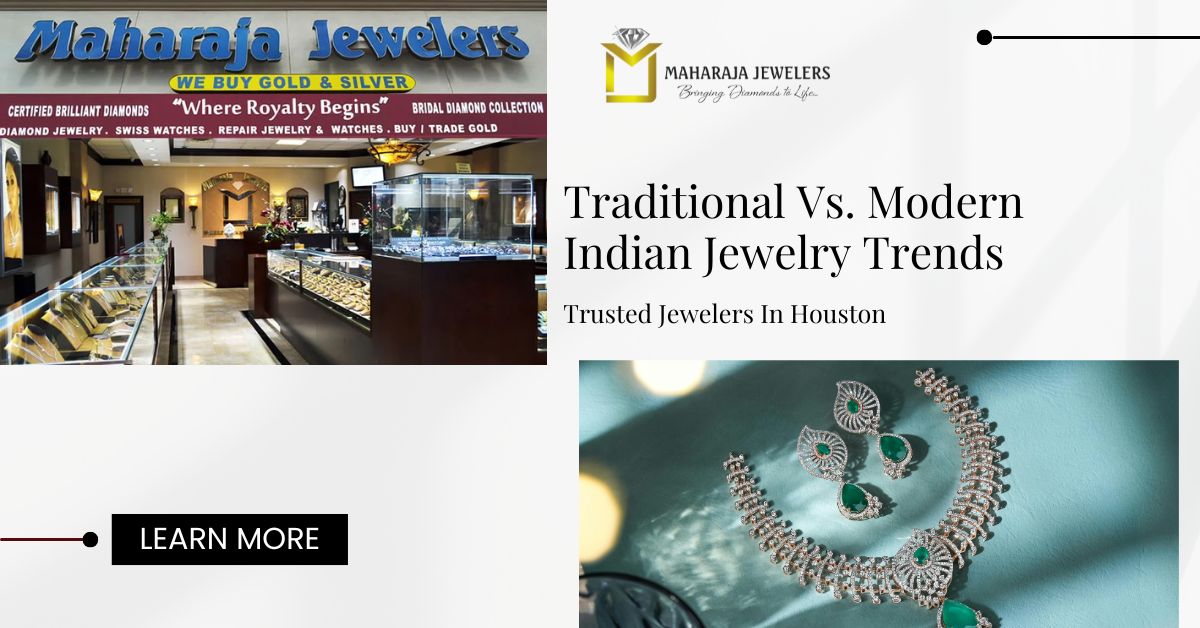
What Makes Traditional Indian Jewelry Traditional
Traditional Indian jewelry developed over centuries across different regions of India, and the craftsmanship reflects that. Pieces are typically made in 22-karat gold, which gives them that deep, warm yellow color you do not see in 14-karat Western jewelry. The weight is intentional. A traditional choker necklace or kundan set is meant to be felt, not forgotten. It signals an occasion. In Indian culture, wearing heavy gold jewelry at a wedding or religious ceremony is not excess; it is participation.
You will see a lot of polki diamonds (uncut, natural diamonds set in gold foil), hand-set gemstones like rubies, emeralds, and pearls, and filigree work so fine it looks like it was drawn rather than cast. Each piece from this category typically has a regional identity too. Jadau work comes from Rajasthan. Temple jewelry has South Indian origins. If you know what to look for, you can tell where a piece was made just by its design language.
What Makes Modern Indian Jewelry Modern
Modern Indian jewelry preserves cultural identity while stripping away weight and occasion-dependence. You are still seeing Indian design motifs- lotus flowers, peacocks, geometric patterns- but executed in lighter metals, thinner settings, and with smaller stones. Many modern pieces use 18-karat gold or even gold-plated silver to bring the price down without sacrificing the aesthetic.
The most popular modern styles in Houston right now are solitaire diamond sets with minimal gold framing, delicate layered necklaces with a small pendant, and thin gold bangles worn stacked rather than as a single heavy piece. These work for work, dinner, events, and everyday wear. They are also significantly easier to travel with because they weigh almost nothing and pack flat.
How They Actually Compare
Here is a practical side-by-side breakdown, not just how they look, but how they function in real life:
| What to Consider | Traditional | Modern |
| Gold purity | Usually 22-karat | Often 18-karat or lower |
| Weight | 20 to 100+ grams per set | 5 to 20 grams per set |
| Price range | $1,500 to $10,000+ | $300 to $2,500 |
| Best occasions | Weddings, religious events, festivals | Daily wear, parties, work |
| Resale value | Higher (purer gold) | Lower (less gold content) |
| Customization | Common, especially for bridal | Available but less complex |
| Stone type | Polki, kundan, rubies, emeralds | Diamonds, CZ, small sapphires |
| Durability | Built to last generations | Lighter, requires more care |
Neither is better. They serve completely different purposes.
Why Houston Has Become a Real Hub for Both
Houston’s Indian community is one of the largest in the United States, and the Hillcroft area in particular has developed into a genuine destination for Indian jewelry shopping. What makes this market different from, say, buying Indian jewelry online or in India itself, is the access to custom work. Stores like Maharaja Jewelers on Hillcroft Street can take a traditional design you saw at a relative’s wedding and rebuild it lighter, in a lower-karat gold, so it fits your daily life instead of sitting in a box for thirty years.
That mix is what Houston shoppers have figured out. You do not have to choose one style and stick to it. Many people here own both: a traditional bridal set for major occasions and a modern everyday collection for everything else.
Indian Bridal Jewelry in Houston: Where the Two Worlds Meet
Bridal jewelry is where the traditional vs. modern conversation gets most interesting because Houston brides are increasingly asking for something in between. They want the visual weight and cultural significance of traditional bridal jewelry but do not want to wear eight pounds of gold through a six-hour reception.
The solution most jewelers here are offering is hybrid bridal sets: 22-karat gold construction for authenticity and resale value, but lighter stone settings that reduce the physical weight without reducing the visual impact. Diamond chokers are replacing some of the heavier polki necklaces. Slim gold bangles are being layered instead of wearing a single thick kangan. It is an evolution, not a departure.
How to Pick the Right Style for What You Actually Need
Before you walk into any store, answer three questions. What occasion am I buying for? What is my budget? And how often do I realistically expect to wear this?
If you are buying for a wedding, traditional is worth the investment because it holds its gold value and photographs beautifully. If you are buying for regular wear, modern is the smarter choice because you will actually use it. If you want one piece that works for both, look for a mid-weight design in 22-karat gold with a simple setting, something that does not look out of place at a dinner but also would not look wrong at a wedding.
At Maharaja Jewelers, we let you look at both categories side by side and work through the right choice for your life, not just your budget.
Caring for Both Types
Traditional and modern jewelry need different levels of attention. Traditional gold pieces with gemstones should be cleaned professionally once a year. Do not use ultrasonic cleaners on anything with polki or kundan settings; the gold foil backing on polki diamonds can lift with vibration. Store pieces individually, ideally wrapped in soft cloth, to prevent the stone settings from scratching each other.
Modern pieces with diamonds are more forgiving. A light scrub with warm water and a soft toothbrush handles most residue. The main thing to watch is prong settings on small diamonds; they can loosen with daily wear faster than you would expect.
Frequently Asked Questions
Houston has one of the largest South Asian communities in the country. For many families here, jewelry is not a fashion accessory. It is a savings vehicle, a cultural statement, and a family heirloom all in one piece. That gives Indian jewelry a different kind of meaning than most Western fine jewelry.
22-karat gold holds its value closely to the spot price of gold. A traditional set bought for its gold weight will retain most of that value over time, especially if the craftsmanship is high. Modern pieces with lower gold content are not as strong from a resale perspective.
Modern Indian pieces were practically designed for this. Thin gold chains, small diamond studs, and stacked bangles blend naturally into Western outfits. Traditional pieces work too, but you have to be intentional about it. A single heavy necklace over a plain black dress is a deliberate, considered look.
22-karat gold is 91.6% pure gold mixed with a small amount of copper or silver to add hardness. It has a richer, deeper yellow than the 14-karat gold common in American jewelry. Indian goldsmithing traditions developed around 22-karat because it is soft enough to shape into detailed designs by hand, which is how most traditional pieces were made before industrialization.
Ask for a hallmark certificate. Legitimate Indian jewelry stores will provide one. The piece itself should have a BIS hallmark or equivalent certification stamped into it. If a store cannot produce certification, walk out.