

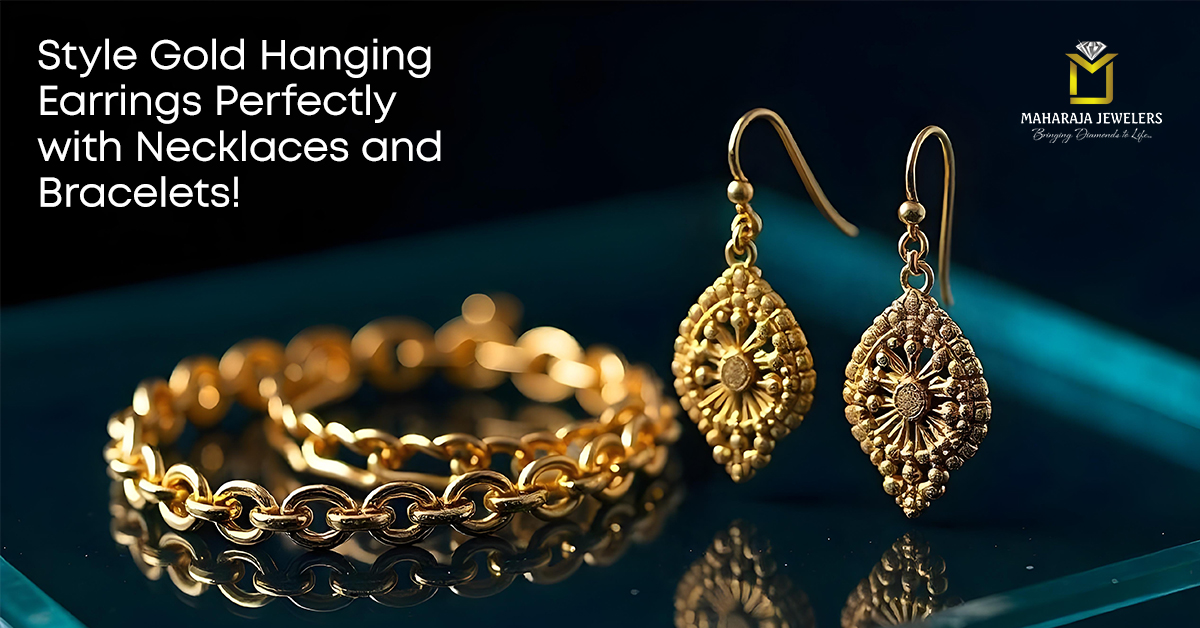
Earrings this long and this present change everything about how a jewelry combination works. When you have gold hanging earrings on, the rules for adding a necklace and bracelets shift completely from what you would do with studs or hoops. Most people make the mistake of treating each piece separately and then wondering why the overall look feels busy or off. This guide walks you through how to think about the combination as a whole, not as individual decisions made one at a time.
Start with the Earrings, Then Work Outward
The earring should always be the anchor point when it is a hanging or chandelier style. Everything else gets chosen in relation to it, not alongside it. Before you reach for a necklace, look at the earring and answer two questions: how much of your neck and chest does the earring occupy visually, and what is the dominant element, length, stone, or metalwork?
A long gold earring that reaches your collarbone already fills the neckline space that a necklace would normally occupy. In that case, the necklace needs to either sit above the earring (a short choker at 14 to 16 inches) or fall well below it (a longer chain at 24 inches or more). Anything in between, around 18 inches, lands right in the same visual zone as the earring and makes the whole neckline look crowded.
The Necklace Length Rules That Actually Work
Here is a practical length breakdown based on earring type:
Small or short hanging earrings that reach just below the earlobe work with almost any necklace length. This is the most flexible combination because the earring is not dominating the space. A 16-inch princess-length chain, a layered look at 18 and 24 inches, or a bold statement piece all work here.
Medium hanging earrings that reach the jaw or just below it need a clear separation from the necklace. A tight choker at 14 to 15 inches works because it sits above the earring visually. A longer chain at 22 inches or more works because it falls below the earring’s endpoint. Avoid 16 to 20-inch lengths with this earring size.
Long hanging earrings that reach the collarbone or shoulder are the most common pairing mistake. At this length, skip the necklace entirely or choose a very tight choker that reads as a separate decorative element near the throat rather than competition for the same space.
Traditional Indian Hanging Earrings Need Different Rules
Traditional jhumka earrings or chandelier sets in 22-karat gold are heavy, layered, and visually loud by design. They were made to be the centerpiece of a look, and the rest of the jewelry traditionally stays secondary. For these pieces:
A traditional gold neckpiece like a choker or a short temple necklace works because it completes the cultural aesthetic without competing. Simple gold bangles or a single broad bangle on each wrist keeps the wrists from being bare without pulling attention from the earring. The mistake most people make is adding a full bridal set neckpiece when they are wearing chandelier earrings. That combination works for a bride who needs full coverage in photographs, but for any other occasion it reads as too much.
Bracelets: The Part Most People Get Wrong
Bracelets are the easiest element to overdo when you already have statement earrings. The wrist and the ear are at opposite ends of the body’s visual attention, so there is less direct competition there compared to a necklace and earring in the same neckline space. But bracelets still need to be proportional to the rest of what you are wearing.
With bold hanging earrings, two to three thin gold bangles or a single wider gold cuff keeps the wrist interesting without overwhelming. With smaller hanging earrings, you have more freedom to layer, and three to five bangles in mixed finishes or a charm bracelet works well. The one combination to always avoid is a chunky statement bracelet with oversized hanging earrings. Both are fighting for visual attention and neither wins.
Matching Metals the Right Way
Matching metals does not mean identical metals. All gold is not the same. 22-karat gold has a deep, rich yellow tone. 18-karat gold is slightly lighter and brighter. 14-karat gold reads almost warm-toned white in some lights. If your earrings are 22-karat, mixing in an 18-karat gold necklace and bracelet looks cohesive because the tones are close. Mixing 22-karat gold earrings with silver or white gold creates deliberate contrast, which can look intentional and modern if the pieces are otherwise similar in style weight.
Where it goes wrong is when you mix heavy traditional 22-karat gold earrings with a delicate 14-karat white gold chain. The earring reads as Indian traditional fine jewelry; the necklace reads as American mall jewelry. The quality levels look mismatched even if the person wearing them cannot explain why.
How to Dress the Combination for Different Occasions
For a formal occasion or evening event, choose one statement element and make everything else quiet. If the earrings are the statement, keep the necklace simple and clean and wear one thin bracelet or nothing on the wrist.
For a casual day look, the most wearable combination is small gold hanging earrings with a layered necklace in two lengths and a stack of thin bangles. It looks assembled and thoughtful without requiring much effort.
For a wedding or cultural event where full traditional jewelry is expected, follow the set as it was designed. Traditional Indian jewelry sets are made to be worn together. The necklace, earring, and bangles in a set are proportioned for each other. Mixing pieces from different sets often means different stone settings and different gold tones that work against each other.
Gemstone Matching: When to Match, When Not To
If your gold hanging earrings have colored stones, ruby, emerald, sapphire, or enamel, you have two options. You can match the color in other pieces, a necklace with a small ruby pendant if your earrings have rubies, which creates a coordinated look. Or you can go tone-on-tone gold with no competing color, which lets the earring stones remain the color statement in the look. What does not work is mixing multiple colored stones across earring, necklace, and bracelet. Three different gemstone colors across three pieces reads as accidental, not styled.
Customizing Pieces So They Actually Work Together
If you find that none of your existing necklaces or bracelets pair cleanly with a pair of earrings you love, custom work is the most practical solution. A jeweler can make a thin matching chain in the same gold karat and finish as your earring, or add a small pendant that pulls a specific stone color from the earring design. This is especially useful with traditional Indian earrings that have very specific design language, since finding an off-the-shelf necklace that matches a kundan or jadau earring is close to impossible.